
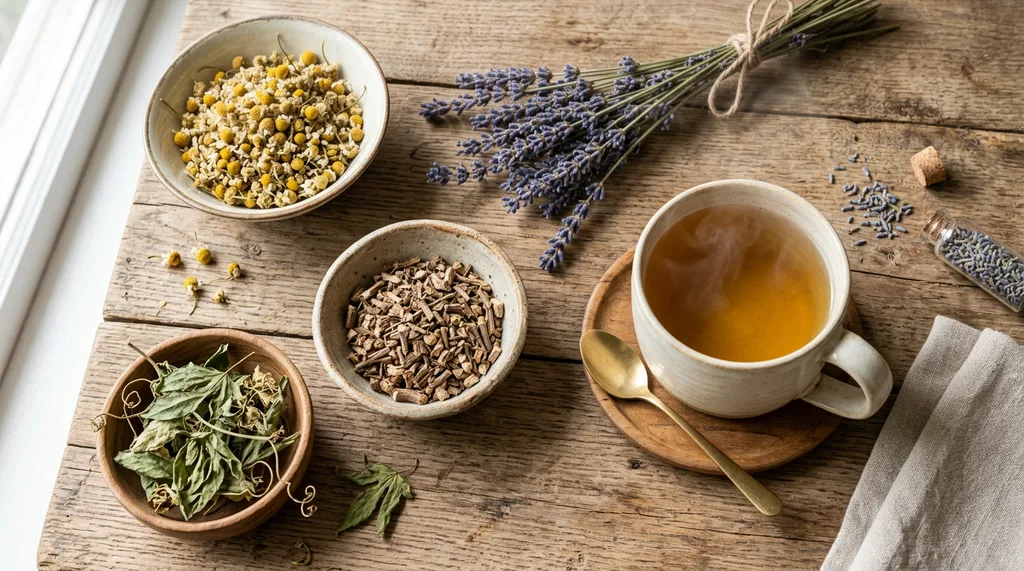
Best Herbs for Sleep: Valerian, Chamomile, Lavender, and More
Why herbal sleep aids work for some people
Poor sleep is one of the most common health complaints, and the causes vary: stress, anxiety, irregular schedules, underlying conditions. Herbal remedies are not a cure for chronic insomnia, but for mild, stress-related sleep difficulties, certain herbs have a meaningful calming effect on the nervous system. Here are the best herbs for sleep that have real evidence behind them.
Valerian root
Valerian is one of the most studied herbal sleep aids. It grows wild across Europe, Asia, and parts of Africa, and its root has been used for centuries to ease anxiety and promote sleep. Research suggests valerian may increase levels of GABA in the brain, the same pathway targeted by prescription sleep medications, though with milder effects. It works best when taken consistently over a period of two to four weeks rather than as a one-night fix.
Chamomile
Chamomile is probably the most familiar herb on this list. Chamomile tea before bed is a well-established evening ritual for a reason. The active compound, apigenin, binds to receptors in the brain that promote relaxation and reduce anxiety. Studies have found it particularly helpful for generalized anxiety disorder and mild insomnia. It combines well with other calming herbs like valerian or lemon balm. According to the National Center for Complementary and Integrative Health, chamomile is generally considered safe for most adults when used short-term.
Lavender
Lavender is primarily used aromatically rather than ingested, and the research supports this. Inhaling lavender essential oil before sleep has been shown in multiple studies to improve sleep quality, reduce nighttime waking, and decrease anxiety. It works through the olfactory system and affects the limbic system directly. A diffuser in the bedroom or a few drops on your pillow is all you need.
Passionflower
Passionflower is less well-known but well-researched. Like valerian, it increases GABA activity in the brain. Studies have found it comparable to low-dose sedative medications for managing mild insomnia and anxiety, without the addictive potential. It does not cause next-day grogginess at typical doses. Passionflower is commonly combined with valerian and hops in commercial sleep supplements.
Lemon balm
Lemon balm (Melissa officinalis) has been used as a calming herb since at least the Middle Ages. It reduces anxiety and promotes relaxation, particularly when combined with valerian. It also shows mild antiviral properties and has been studied for mood improvement and cognitive function. Lemon balm tea or supplements are widely available and generally well-tolerated.
Melatonin (a note on why it is different)
Melatonin is worth mentioning here even though it is technically a hormone, not an herb. The body produces melatonin naturally in response to darkness, signaling that it is time to sleep. Melatonin supplements are most effective for circadian rhythm disruption, like jet lag or shift work, rather than traditional insomnia. For general sleep support, the herbs above often work better. For sleep environment tips that support melatonin production naturally, white noise machines are also worth considering alongside a consistent evening routine.
How to use herbal sleep aids safely
Herbal sleep aids are available as teas, capsules, tinctures, and combination supplements. A few things to keep in mind:
- Start with one herb at a time to assess how you respond.
- Herbal remedies can interact with prescription medications, particularly sedatives, antidepressants, and blood thinners. Consult your doctor if you take any regular medications.
- They are most effective for temporary or stress-related sleep problems, not for sleep disorders like sleep apnea, which require medical evaluation.
- Give them two to four weeks before deciding if they work for you.
FAQs about herbs for sleep
What is the most effective herb for sleep?
Valerian root has the most clinical research behind it and is often considered the most effective herbal sleep aid for mild insomnia. Chamomile is the most widely used and best tolerated. Many people find combinations, such as valerian with lemon balm or passionflower, more effective than any single herb alone.
Is it safe to take herbal sleep aids every night?
Most herbal sleep aids are considered safe for short-term use, typically up to four to eight weeks. Long-term daily use should be discussed with a healthcare provider. Unlike prescription sleep medications, most of these herbs do not cause physical dependence at typical doses.
How long does it take for herbal sleep aids to work?
Chamomile and lavender can have a mild effect the same night. Valerian and passionflower tend to work better after consistent use over one to two weeks. Melatonin acts within 30 to 60 minutes and is most effective when taken 30 to 60 minutes before your target bedtime.
Can I combine herbal sleep supplements?
Many herbal combinations are commonly used and available in commercial supplements, such as valerian with passionflower and hops, or chamomile with lemon balm. Start at lower doses when combining herbs and consult a doctor if you are taking other medications.
When should I see a doctor about sleep problems?
If sleep problems persist beyond a month, are causing significant daytime impairment, or are accompanied by snoring, gasping, or long pauses in breathing, see a doctor. These may indicate a sleep disorder like sleep apnea that herbal remedies cannot address.