
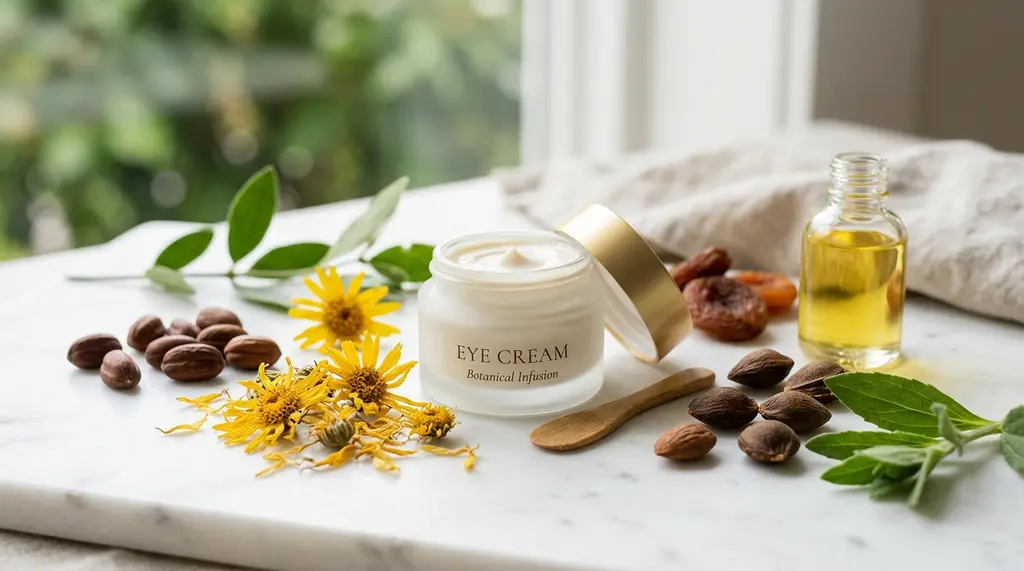
Eyevage Review: Eye Cream Ingredients, Results, and Verdict
The skin around the eyes is the thinnest on the face — roughly 0.5mm compared to around 2mm elsewhere — which is why signs of aging appear there first. Crow’s feet, puffiness, dark circles, and fine lines under the eyes are all products of this thin, fragile skin losing elasticity and moisture over time. Eye creams exist specifically because the delicate orbital area generally cannot tolerate the heavier formulations used on the rest of the face. Eyevage, made by American skincare company Solvaderm, is positioned as a premium eye cream targeting all four of these concerns. Here is what the formula contains, what the research behind key ingredients actually shows, and who is likely to benefit from it.
What is Eyevage?
Eyevage is an anti-aging eye cream produced by Solvaderm, a US-based skincare brand that formulates its products with input from a team of dermatological professionals. The product is designed to address the primary cosmetic concerns around the eye area: fine lines, crow’s feet, dark circles, puffiness, and loss of firmness. It uses a water-based formulation with a range of active ingredients — antioxidants, emollients, and moisture-retaining compounds — and is packaged in a pump dispenser that maintains hygienic dispensing throughout the product’s life.
Eyevage costs $74.99 on the official Solvaderm website and on Amazon. The price puts it in the premium consumer segment — above drugstore options, below prestige department store brands. The company offers a 60-day money-back guarantee, which is longer than industry standard and suggests reasonable confidence in customer outcomes.
Key ingredients and what the research shows
Hyaluronic acid
Hyaluronic acid is a molecule found naturally in connective tissue and skin that can hold up to 1,000 times its weight in water. When applied topically, it draws moisture to the skin’s surface and creates a plumping effect that temporarily reduces the appearance of fine lines. Research published in the International Journal of Biological Macromolecules confirms that topical hyaluronic acid can improve skin elasticity and reduce wrinkle depth with regular use. It is one of the most evidence-backed moisturizing ingredients in cosmetic formulation.
Jojoba seed oil
Jojoba oil is technically a liquid wax extracted from the seeds of the jojoba shrub (Simmondsia chinensis), native to the Sonoran Desert. Its molecular structure closely resembles the skin’s natural sebum, which makes it well-tolerated even on sensitive skin. It is rich in antioxidants and anti-inflammatory compounds — wax esters and tocopherols — that can reduce redness and puffiness around the eyes. A paper published in the Rasayan Journal of Chemistry documented its conditioning and barrier-restoration properties in cosmetic applications.
Vitamin K
Vitamin K plays a role in blood coagulation, and this mechanism has been applied to cosmetic use: topical vitamin K is theorized to help with dark circles because peri-orbital darkness is often caused partly by blood pooling beneath thin skin. Whether topical vitamin K meaningfully addresses dark circles is still debated in the literature — a study in the Indian Journal of Dermatology found positive effects on wound healing and some skin-tone benefits, though dark circle reduction specifically requires more research. Eyevage includes it as a supporting ingredient rather than the primary active.
Apricot kernel oil
Pressed from apricot seeds, apricot kernel oil is high in oleic and linoleic acids, which contribute to the skin’s lipid barrier. It also contains vitamins E and K, making it an emollient with antioxidant properties. For the eye area, its value is primarily in softening the skin and supporting barrier function, which reduces moisture loss over time. It is lighter than many other oils and absorbs without a greasy residue — a meaningful property for a product applied near the eyes.
Arnica montana extract
Arnica montana is a plant long used in traditional medicine for its anti-inflammatory properties. In cosmetics, it is used primarily to reduce swelling and redness. For the eye area, the potential application is reducing puffiness and under-eye bags. The evidence base is moderate — arnica has demonstrated anti-inflammatory activity in clinical settings — but its concentration in cosmetic formulations varies, and the effectiveness at typical over-the-counter doses is not as well-established as for hyaluronic acid.
How to use Eyevage
Eyevage is applied twice daily — once in the morning and once before bed — after cleansing. The pump dispenser delivers a consistent amount of product. Apply a small amount on the fingertip and gently tap (do not rub) around the orbital bone, which runs along the edge of the eye socket. Tapping rather than rubbing protects the delicate skin and avoids inadvertent eye irritation. Avoid direct contact with the eye surface.
On first use, the pump requires priming: cover the opening and depress the pump slowly 10-15 times to clear the air chamber before product begins dispensing. This is standard for pump-packaged skincare, not a product defect.
Solvaderm states results are typically visible within 4 weeks of consistent use. This is a reasonable expectation for topical skincare — ingredients like hyaluronic acid produce immediate surface hydration, while collagen-supporting effects develop over weeks of regular application.
Who is Eyevage for?
Eyevage is appropriate for adults noticing early to moderate signs of aging around the eyes: fine lines, crow’s feet, mild puffiness, and uneven skin tone. It is suitable for all skin types including sensitive, given the formulation avoids fragrances and uses well-tolerated ingredients. Younger users can apply it preventively as a hydrating eye treatment even before visible aging develops — the moisturizing components are beneficial regardless of age.
It is not a replacement for medical interventions targeting severe under-eye hollowing, significant puffiness caused by allergies or fluid retention, or hyperpigmentation with a vascular or pigment-based origin. For those concerns, a consultation with a dermatologist is the appropriate route. Our overview of skincare tips for younger-looking skin covers the broader routine context in which an eye cream like Eyevage would fit.
Does anti-aging eye cream actually work?
The honest answer is: it depends on the ingredients and the concern being addressed. A 2019 study in the Journal of Cosmetic Dermatology found that some formulated eye creams do produce measurable improvements in wrinkle depth and periocular skin texture over 8-12 weeks. The key phrase is “some formulated” — many products in this category are primarily marketing with minimal active ingredient concentrations.
Eyevage’s ingredient list includes several compounds with genuine evidence behind them (hyaluronic acid in particular) at presumably meaningful concentrations. The ingredient order on a cosmetic label indicates approximate concentration — hyaluronic acid and jojoba appear early in the list, which is a positive signal. The 60-day return policy also means there is limited financial risk in testing whether the formula works for your specific skin.
For a broader guide to skincare ingredient selection, see our article on top natural skincare ingredients and their evidence base.
Where to buy Eyevage
Eyevage is available through the official Solvaderm website and on Amazon, both priced at $74.99. Purchasing from official sources is advisable to ensure product authenticity and to remain within the guarantee period. The 60-day money-back guarantee applies to purchases made through Solvaderm’s official channel; verify terms before purchasing elsewhere.
Frequently asked questions about Eyevage
Is Eyevage safe for sensitive skin?
Eyevage is formulated without fragrances and uses ingredients that are generally well-tolerated by sensitive skin. However, any cosmetic product carries a risk of individual sensitivity, particularly for skin prone to reactions. If you have highly reactive skin, patch-test the product on your inner forearm for 24-48 hours before applying it to the eye area. Discontinue use if redness, itching, or irritation develops.
How long before Eyevage shows results?
Solvaderm states visible results within 4 weeks of consistent twice-daily use. The immediate hydrating effect of hyaluronic acid is noticeable within the first application. Deeper improvements — reduced wrinkle depth, improved skin tone, reduced puffiness — develop over 4-8 weeks of regular use. Consistency matters significantly with topical skincare; sporadic application is unlikely to produce meaningful results.
What is Eyevage’s money-back guarantee?
Solvaderm offers a 60-day money-back guarantee on Eyevage. To use it, contact the company within 60 days of the original purchase date and return the product. The policy allows one open bottle plus any sealed bottles. The refund covers the product price minus shipping costs. This is a more generous return window than the 30-day standard common in the skincare industry.
Can younger people use Eyevage?
Yes. While Eyevage is designed primarily for those experiencing early signs of aging, younger users can apply it as a preventive hydrating treatment. The hyaluronic acid and emollient ingredients benefit skin at any age, and regular hydration of the eye area is broadly recommended by dermatologists regardless of whether visible aging has begun.
Does anti-aging eye cream actually work?
Formulated eye creams with evidence-backed ingredients — particularly hyaluronic acid, retinol, peptides, and antioxidants — can produce measurable improvements in skin texture and wrinkle appearance. A study in the Journal of Cosmetic Dermatology found that specific formulations reduced periocular wrinkle depth over 8-12 weeks. The degree of improvement depends on the severity of the concern, the specific formulation, and consistency of use. They are not equivalent to clinical treatments like injectables, but they do produce real results for mild to moderate concerns.