Used Car Buying Guide: How to Buy Smart and Avoid Costly Mistakes
Buying a used car is one of the largest financial decisions most people make outside of buying a home — and unlike buying a house, there is rarely a building inspection requirement, a lawyer present, or a standardized disclosure process to protect you. According to the National Automobile Dealers Association, the average used car transaction price in the US reached $28,371 in 2024 — nearly double what it was a decade ago. At that price point, mistakes are expensive. A vehicle that looks fine on a test drive can hide problems that cost thousands in repairs within the first year of ownership.
This guide walks through the complete used car buying process — from setting your budget and choosing where to buy to negotiating price, handling paperwork, and avoiding the most common mistakes buyers make at each stage.
Step 1: Set Your Budget Before You Start Looking
The single most common mistake used car buyers make is starting with a vehicle search before establishing a budget. This leads to falling in love with a car that is financially out of reach, then either stretching the budget dangerously or settling for a different vehicle while still feeling disappointed.
A practical budget calculation works as follows. If financing, your monthly car payment should stay below 15% of your take-home monthly pay — not 15% of gross income, but what actually lands in your bank account. For a household with $5,000 monthly take-home, that means a maximum payment of $750. At current used car loan rates averaging 7-9% for buyers with good credit (as of early 2026), a $750 monthly payment over 60 months supports a loan of roughly $36,000-$38,000 before tax, registration, and fees.
Also factor in total cost of ownership, not just purchase price:
- Insurance: Get quotes before finalizing a vehicle choice. Insurance on a 3-year-old luxury SUV can easily run $200-$400 per month more than a comparable mainstream brand.
- Fuel: A vehicle averaging 20 mpg costs approximately $1,000 more per year in fuel than one averaging 30 mpg at current gas prices.
- Maintenance: European luxury brands cost significantly more to maintain than Japanese or domestic alternatives — parts and labor rates differ substantially.
- Registration: Varies by state and vehicle value. In some states, registering a $30,000 vehicle costs $600 or more annually.
Step 2: Choose the Right Type of Seller
Used cars are sold through three main channels: franchise dealerships, independent used car lots, and private sellers. Each has different advantages, risk profiles, and typical price points.
Franchise dealerships
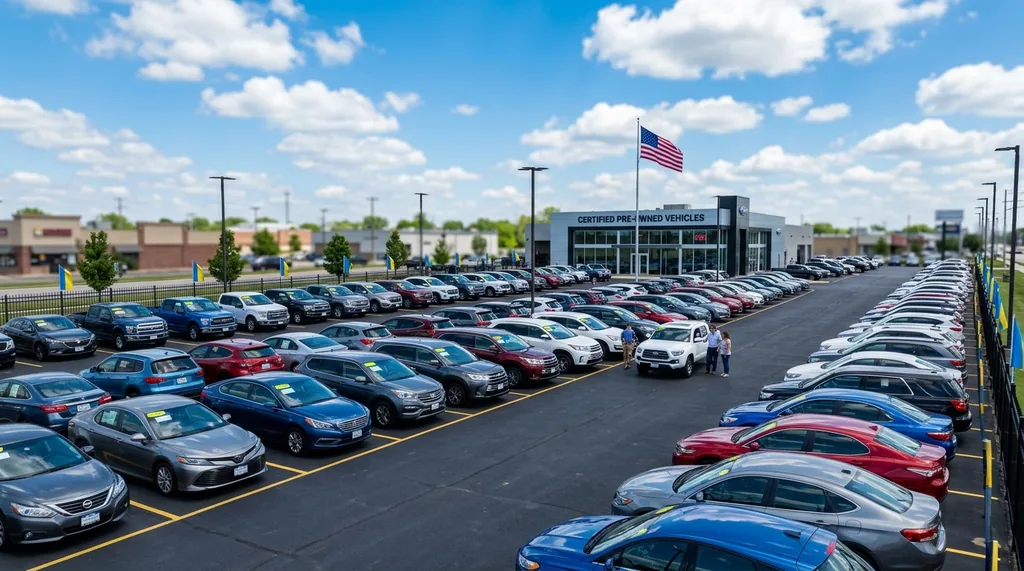
These are the used car departments of new car dealerships (Ford, Toyota, BMW dealers, etc.). They typically offer certified pre-owned (CPO) programs, which include manufacturer-backed warranties and multi-point inspections. CPO vehicles cost more — often $1,000-$3,000 above market for comparable non-certified vehicles — but the added protection is often worth it for buyers who want peace of mind or who are buying a vehicle make they are unfamiliar with.
Independent used car dealers
These range from reputable businesses with decades of history to operations that move problematic inventory quickly. Prices are often more negotiable than at franchise dealers, but buyer protection varies significantly. Always research the dealer’s reputation (Google reviews, Better Business Bureau) before visiting.
Private sellers
Private party sales typically offer the lowest prices — often 10-15% below dealer pricing for comparable vehicles — but come with the highest risk and no recourse after the transaction. As-is means as-is. Best used when buying from someone you can verify has maintained the vehicle and has documentation to prove it.
Step 3: Research Reliability Before Selecting a Model
Consumer Reports publishes annual reliability rankings based on member surveys covering hundreds of thousands of vehicles. Their used car reliability data is the most comprehensive independently compiled resource available. Vehicles rated above average in reliability cost significantly less in unplanned repairs over a 5-year ownership period.
Generally reliable used car categories include:
- Japanese sedans and SUVs (Toyota Camry, Honda Accord, Honda CR-V, Toyota RAV4) — consistently top reliability rankings
- Korean vehicles from the past 5 years (Hyundai, Kia) have improved substantially and now rank competitively
- Domestic trucks and full-size SUVs (Ford F-150, Chevy Silverado) have strong reliability records in mainstream configurations
If you are considering a used EV, our guide to the best electric vehicles of 2026 covers which models have the strongest long-term reliability track record. Vehicles with above-average reliability issues in used car surveys include most European luxury brands (BMW, Mercedes-Benz, Audi, Land Rover) once out of warranty, American sedans from certain model years, and any vehicle with a complex powertrain (dual-clutch transmissions, certain turbocharged engines) without a known service history.
Step 4: Run a Vehicle History Report
Before inspecting any used vehicle, obtain the VIN (Vehicle Identification Number) from the seller and run it through Carfax or AutoCheck. These reports cost $40-$50 for a single report or around $100 for unlimited reports over a limited period, which is worthwhile if you are evaluating multiple vehicles.
A vehicle history report shows:
- Number of previous owners
- Accident history and reported damage
- Service records (where reported to dealers or shops)
- Title issues — salvage title, flood damage, lemon law buyback, odometer fraud
- Registration history by state
A clean Carfax report is necessary but not sufficient. Not all accidents are reported, and not all service is done at shops that report to Carfax. A history report eliminates the worst risks but does not replace a mechanical inspection.
Step 5: Get an Independent Pre-Purchase Inspection
The most important $100-$200 you will spend on a used car purchase is a pre-purchase inspection (PPI) at an independent mechanic who has no financial stake in the transaction. This applies even at reputable dealerships, even on CPO vehicles, and even when the seller claims the car was just serviced.
A qualified mechanic performing a PPI will check:
- Engine and transmission condition (leaks, wear, codes)
- Suspension and steering components
- Brake pad and rotor condition
- Tire condition and uneven wear patterns (which indicate alignment or suspension problems)
- Rust and corrosion — particularly underneath in states that use road salt
- Whether the vehicle shows signs of unreported accident damage or body repair
According to the Federal Trade Commission’s guidance on buying a used car from a dealer, sellers are required by law to display a Buyer’s Guide on every used vehicle, disclosing whether it comes with a warranty or is sold as-is. The PPI gives you the information to evaluate that disclosure meaningfully.
Step 6: Negotiate the Right Way
Used car pricing has become more transparent than at any previous point in history. Tools like Carfax Market Value, Edmunds True Market Value, and the Kelley Blue Book price guide give buyers reliable independent pricing benchmarks before entering any negotiation.
Effective negotiation principles for used cars:
- Research what comparable vehicles (same make, model, year, mileage, trim, and condition) are selling for in your local market — not just the national average
- Negotiate on out-the-door price, not monthly payment. Monthly payment negotiation obscures what you are actually paying.
- Any issues found in the PPI are legitimate grounds for price reduction. Get repair estimates before returning to negotiate.
- Be prepared to walk away. There is no single vehicle that is irreplaceable — another comparable option will become available.
Step 7: Handle the Paperwork Correctly
Title transfer is the most critical legal step in a used car purchase. At a dealership, they handle this process. In a private sale, the buyer is responsible for ensuring the title is clean, correctly signed over, and filed with the DMV within the required timeframe (typically 10-30 days depending on state).
Documentation to verify before completing any transaction:
- Title is in the seller’s name — not a third party, which may indicate the seller does not legally own the vehicle
- Title type is clean — not salvage, rebuilt, or flooded
- Odometer reading on title matches the odometer reading on the vehicle
- Any outstanding liens on the vehicle have been released
In most states, buying a car with an outstanding lien means inheriting the debt. A title search through your state’s DMV can confirm lien status before any money changes hands.
Used Car Buying Checklist: What to Bring and Verify
Having a structured checklist reduces the chance of overlooking something under the pressure of an in-person transaction. Print this or save it on your phone before visiting any seller.
Before the visit:
- VIN obtained from seller — run Carfax or AutoCheck report
- Comparable market pricing researched (Edmunds, KBB, local listings)
- Pre-purchase inspection mechanic identified and appointment scheduled
- Insurance quote obtained for the specific vehicle
- Financing pre-arranged if not paying cash
During inspection and test drive:
- Check all exterior panels for consistent paint color and texture — inconsistency suggests prior bodywork
- Check door gaps — uneven gaps indicate frame damage or poor repair work
- Look under the vehicle for rust, fluid leaks, and damaged underbody components
- Check the engine bay for fresh oil coating on components, which can mask leaks
- Test all electronics — windows, locks, AC, heat, infotainment, backup camera
- Drive at highway speeds — vibration or pulling indicates wheel balance, alignment, or suspension issues
- Test the brakes at moderate speed — pulling to one side indicates a stuck caliper or uneven wear
At the mechanic:
- Ask specifically for a scan of stored diagnostic trouble codes, even if the check engine light is off
- Ask whether any repairs are imminent — brake pads, tires, belts, battery
- Get a written report to use in price negotiation
At the transaction:
- Confirm the out-the-door price in writing before signing anything
- Verify the title is clean, in the seller’s name, and free of liens
- Do not sign a blank “we owe” form — get any promised work in writing on the contract
Frequently Asked Questions About Buying a Used Car
What should I check when buying a used car?
Before purchasing, run a vehicle history report (Carfax or AutoCheck) to check for accident history, title issues, and odometer fraud. Have an independent mechanic perform a pre-purchase inspection covering the engine, transmission, brakes, suspension, and body condition. Verify that the title is clean and in the seller’s name, with no outstanding liens. Test drive the vehicle in multiple conditions — city, highway, and parking maneuvers.
How many miles is too many on a used car?
Mileage matters less than condition and maintenance history. A well-maintained vehicle with 100,000 miles is a better purchase than a neglected one with 60,000. As a rough benchmark, average annual mileage in the US is around 12,000-15,000 miles. A 5-year-old vehicle with 60,000-75,000 miles is typical. Above 150,000 miles, major components like the timing belt, water pump, and transmission may need attention — factor repair costs into the purchase price.
Is it better to buy from a dealer or private seller?
It depends on your priorities. Dealers offer more protection — CPO warranties, dealer guarantees, and financing options — but charge higher prices. Private sellers offer lower prices but as-is transactions with no recourse after the sale. For a first used car purchase or if you are unfamiliar with the make and model, a reputable dealer is lower risk. Experienced buyers who can evaluate vehicle condition themselves often get better value through private sales.
What documents do I need to buy a used car?
To complete a used car purchase you need: government-issued photo ID, proof of insurance (required before driving off), payment method or approved financing documentation, and the signed title from the seller. For a private sale, also bring a bill of sale document to sign, even if your state does not require it — it provides a written record of the transaction terms.
How do I avoid buying a used car with hidden problems?
Run a Carfax or AutoCheck report to check for reported accidents, flood damage, and title issues. Hire an independent mechanic for a pre-purchase inspection before finalizing any deal. Research the specific model year’s known issues using Consumer Reports or forums specific to that vehicle. Be cautious of vehicles priced significantly below market — it usually means something is wrong that the seller knows about and you do not yet.