
Food and Drink Choices for the Healthy Eater: A Practical Guide
What makes a food or drink choice healthy?
A healthy food or drink choice is one that provides genuine nutritional value — vitamins, minerals, fibre, protein, or healthy fats — without excessive added sugars, salt, or harmful fats. According to the World Health Organization’s healthy diet guidelines, the foundation of a good diet is variety: no single food covers all nutritional bases, which is why eating a wide range of whole foods matters more than fixating on any one superfood.
The practical challenge is that processed and ultra-processed foods are cheap, convenient, and engineered to be highly palatable. Understanding what to prioritise — and why — makes it easier to navigate those choices.
Best food choices for healthy eaters
Fruits and vegetables
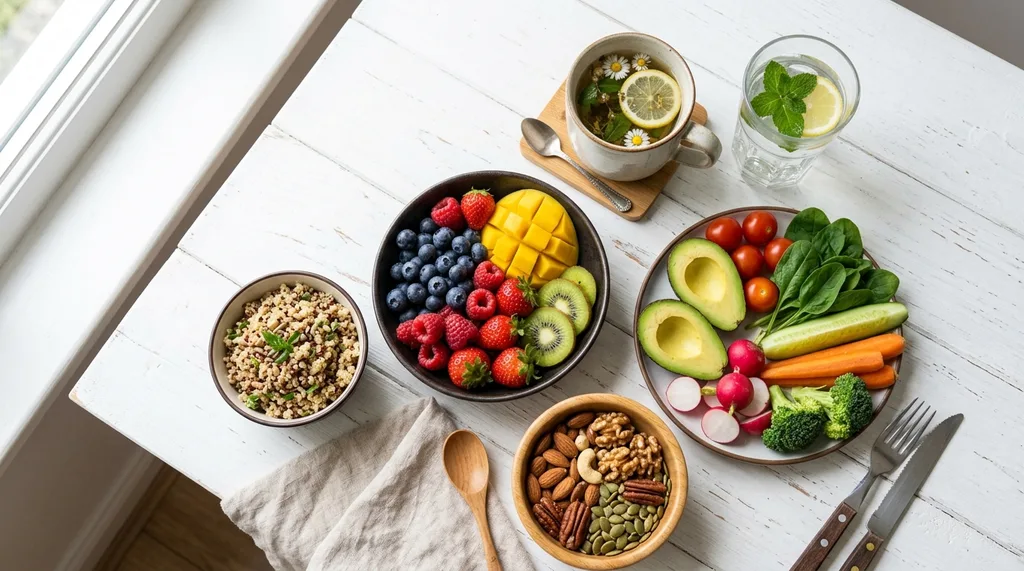
Fruits and vegetables are rich in fibre, vitamins, and minerals, and most people don’t eat enough of them. Leafy greens, berries, citrus fruits, tomatoes, peppers, and sweet potatoes are all useful choices. Variety matters here too — different coloured vegetables and fruits tend to provide different phytonutrients, so eating a range across the week covers more nutritional ground than eating the same two or three repeatedly.
Whole grains
Whole grains provide complex carbohydrates, fibre, and minerals that refined grains lose during processing. Oats, brown rice, quinoa, whole-grain pasta, and wholemeal bread are practical everyday choices. The fibre in whole grains slows digestion, helps maintain stable blood sugar, and tends to keep you fuller for longer than refined equivalents.
Lean proteins
Protein supports muscle maintenance, satiety, and a range of metabolic processes. Fish, poultry, eggs, tofu, legumes, and low-fat dairy are reliable lean protein sources. Fish — especially oily fish like salmon or mackerel — also provides omega-3 fatty acids, which most Western diets are deficient in. Aim to include protein in every meal rather than concentrating it in one sitting.
Nuts, seeds, and healthy fats
Almonds, walnuts, chia seeds, sunflower seeds, and pumpkin seeds are dense in minerals, healthy fats, and protein. Avocados and olive oil provide heart-healthy monounsaturated fats. These foods are calorie-dense, so portions matter, but they are far preferable to the saturated and trans fats found in processed foods. Harvard’s Nutrition Source identifies unsaturated fats from these foods as among the most evidence-supported dietary choices for long-term cardiovascular health.
Fermented foods
Yogurt, kefir, sauerkraut, and kimchi contain live bacterial cultures (probiotics) that support gut health. The gut microbiome has wide-ranging effects on digestion, immunity, and even mental health. Fermented foods are one of the most direct ways to introduce beneficial bacteria, especially if you’re not taking a probiotic supplement. Plain, unsweetened yogurt is the easiest entry point for most people.
Herbs and spices
Turmeric, ginger, cumin, rosemary, and basil add flavour without salt or sugar, and several have documented anti-inflammatory or antioxidant properties. Turmeric in particular has been widely studied for its active compound curcumin, though absorption is significantly improved when consumed with black pepper. Using herbs and spices liberally is one of the lower-effort ways to increase the nutritional density of ordinary meals.
Best drink choices for healthy eaters
Water
Water has no calories, no additives, and is essential for virtually every biological process. Eight glasses a day is a commonly cited guideline, though actual needs vary by body size, activity level, and climate. If plain water feels boring, infusing it with lemon, cucumber, or mint is a useful habit without meaningfully changing the calorie count.
Herbal and green teas
Green tea is high in antioxidants and has been associated in research with reduced inflammation and improved metabolic markers. Herbal teas — peppermint, chamomile, ginger, and others — provide hydration alongside specific benefits depending on the herb. Both are good alternatives to sugary drinks and lower in caffeine than coffee.
Plant-based milk alternatives
Soy, almond, oat, and coconut milk are useful options for people who are lactose intolerant or avoiding dairy. Nutritional profiles vary significantly — oat milk is higher in carbohydrates, almond milk is low in protein, soy milk most closely matches dairy for protein content. Check labels for added sugars, which are common in flavoured versions.
Smoothies and fresh juices
Smoothies made with whole fruits, vegetables, and a protein source are a convenient way to get nutrients when time is short. Fresh juices can be nutritious but concentrate natural sugars without the fibre that slows their absorption — a 300ml glass of orange juice contains roughly the same sugar as two to three oranges, without the fibre that makes whole fruit the better choice for blood sugar management.
Why limiting processed foods matters
Processed food — anything that has been significantly altered from its whole state through cooking, canning, or the addition of preservatives, flavourings, or sweeteners — tends to be high in exactly what most people already overconsume: sugar, salt, and unhealthy fats. It also tends to be low in fibre and micronutrients.
Research consistently links diets high in ultra-processed foods with elevated risks of obesity, type 2 diabetes, high blood pressure, and several cancers. The mechanism isn’t mysterious: processed foods are calorie-dense, nutrient-poor, and engineered to override satiety signals, making overconsumption easy. If you’re trying to manage weight, a guide to beating a weight loss plateau covers some of the practical tactics that build on clean eating habits. And for those considering supplementation to fill gaps, the case for nutritional supplements is worth reading alongside the food fundamentals.
Frequently asked questions about healthy food and drink
Frequently Asked Questions
What are the healthiest food and drink choices?
Water is the healthiest drink, with no calories and essential roles in every body function. The healthiest diet overall is rich in fruits, vegetables, whole grains, lean proteins, legumes, nuts, and seeds, while low in processed foods, added sugars, and unhealthy fats.
What are 7 healthy eating habits to develop?
Seven useful habits are: eating plenty of fruits and vegetables daily; choosing high-fibre starchy carbohydrates; including lean protein and healthy fats; cutting back on processed foods, sugar, and salt; drinking enough fluids — especially water; eating mindfully and listening to hunger cues; and planning meals in advance.
What should I drink daily to stay healthy?
Water is the baseline — aim for 8 glasses or more per day. Other good daily options include green tea for antioxidants, lemon water to support digestion, and smoothies made with fruit and plant-based milk. Plain water covers hydration; green tea and herbal teas add antioxidant value without significant calories.
What is the best thing to drink first thing in the morning?
Warm water with lemon and honey, ginger tea, or a probiotic drink like kefir are useful morning choices for gut health and digestion. Apple cider vinegar diluted in water is another option some people use to support digestion and reduce inflammation, though the evidence is mixed.
Why should I avoid processed foods?
Processed foods are typically high in added sugars, salt, and unhealthy fats, and often low in the nutrients removed during manufacturing. Regular consumption is associated with higher risks of obesity, high blood pressure, type 2 diabetes, and heart disease. Choosing whole, minimally processed foods instead provides more fibre, vitamins, and minerals per calorie.