
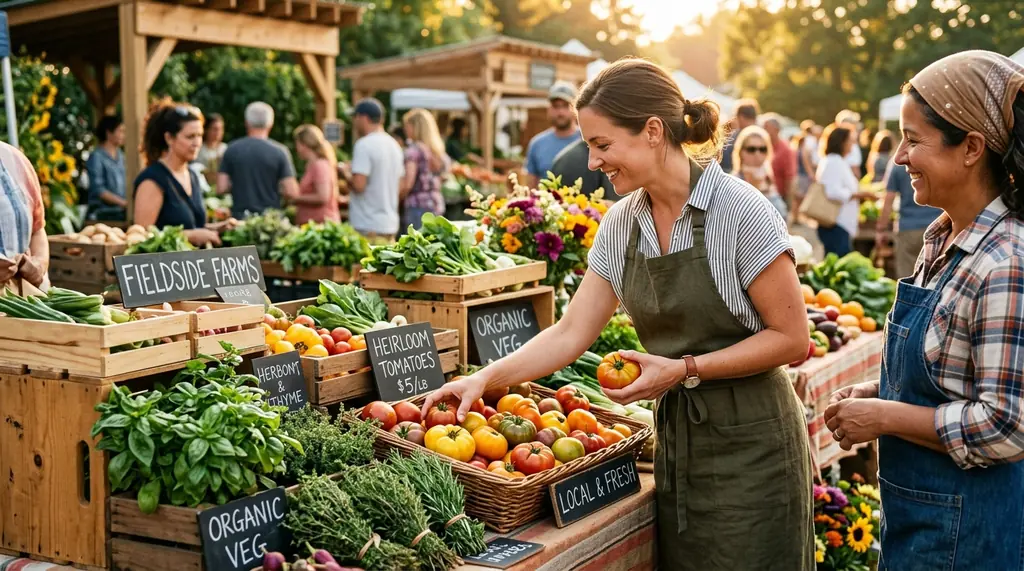
The Farm-to-Table Movement: How It Started, What It Changed, and Where It’s Headed
The farm-to-table movement is one of the few food trends that genuinely changed the way Americans eat. Not just where they shop or which buzzwords they use on menus, but the actual relationship between the person cooking and the person who grew the ingredients. That shift — from anonymous supply chain to direct connection — is at the core of what this movement is about.
It started as a counterculture response to industrialized agriculture in the 1960s. Today it’s a mainstream dining philosophy practiced in restaurants, school cafeterias, and home kitchens across the country. Understanding how it evolved matters, especially as debates about food systems, sustainability, and nutrition keep intensifying.
What Is the Farm-to-Table Movement?
Farm-to-table is a culinary philosophy that sources ingredients directly from local or regional farms, cutting out the long supply chains typical of industrial food production. Also called farm-to-fork or locally sourced dining, the idea is simple: food travels the shortest possible distance from where it’s grown to where it’s eaten.
In practice, this means chefs build menus around what’s in season locally, restaurants form direct relationships with nearby farms, and consumers seek out farmers’ markets over big-box grocery stores. The approach prioritizes freshness, seasonality, and transparency over convenience and shelf life.
Where It Came From: The 1960s and Alice Waters
The farm-to-table movement grew out of 1960s counterculture, specifically the back-to-the-land movement that pushed back against corporate agriculture and processed food. People were asking hard questions about what industrial farming was doing to soil health, animal welfare, and human health — questions that hadn’t been mainstream before.
The most important figure in bringing those ideas into restaurant kitchens was Alice Waters. In 1971, she opened Chez Panisse in Berkeley, California, with a then-radical premise: serve only what was freshly available from local producers, and let that drive the menu. No fixed dishes, no imported ingredients just because they looked impressive on paper.
Waters didn’t just run a restaurant. She spent decades advocating for food education. In 1995, she founded the Edible Schoolyard Project, which brought cooking and gardening into school curricula, giving kids direct contact with where food comes from. That project is now active in communities across the U.S. and internationally.
Key Figures Who Shaped the Movement
Waters wasn’t alone. A generation of chefs, farmers, and writers built on her foundation.
Dan Barber, chef and co-owner of Blue Hill in New York City and Blue Hill at Stone Barns in Westchester County, became one of the movement’s most articulate voices. His 2014 book The Third Plate: Field Notes on the Future of Food argued that even farm-to-table dining, as practiced in most restaurants, still relies on a narrow set of crops and cuts of meat. Real sustainability, he wrote, means eating the whole farm — including the less glamorous vegetables and secondary cuts that make rotational farming economically viable for growers.
The movement also produced institutional momentum. Community Supported Agriculture (CSA) programs, which let consumers buy seasonal produce shares directly from local farms, grew from a handful of programs in the 1980s to thousands across the country by the 2000s. Farmers’ markets followed a similar trajectory.
How Farm-to-Table Changed What Americans Eat
The impact on American diets is real and measurable, though unevenly distributed.
The most direct effect has been a renewed interest in seasonal eating. When you’re buying from a local farm, you eat what’s available now — not what was shipped from a greenhouse 2,000 miles away. This seasonal discipline reconnects people with the natural growing calendar: strawberries in June, squash in October, rather than the artificial year-round availability that industrial supply chains enable.
Heirloom and heritage varieties have seen a genuine revival. Small-scale farms growing for local markets have incentive to cultivate varieties chosen for flavor rather than durability in transport. That’s why farmers’ markets carry tomatoes in eight colors and forty shapes, while supermarkets carry two. The difference isn’t decorative — it reflects entirely different selection criteria.
Sustainable farming practices have benefited too. Consumer demand for organically produced food, grass-fed meat, and sustainably caught seafood has pushed larger food producers to respond. Whether that’s genuine change or marketing adaptation varies by company, but the demand signal is clear.
For practical kitchen guidance, this article on essential food spices every kitchen needs covers how to work with the seasonal, fresh ingredients that farm-to-table sourcing produces.
The Cost Problem: Who Farm-to-Table Actually Reaches
The honest critique of the farm-to-table movement is that it remains largely a privilege. Organic and locally sourced food costs more — often significantly more — than conventionally produced alternatives. A $4 heirloom tomato at a farmers’ market isn’t an option for everyone.
Small-scale sustainable farming is more labor-intensive and less subsidized than industrial agriculture. The USDA’s National Farmers Market Directory lists over 8,000 markets across the country, but geographic and economic access varies enormously. Urban food deserts — neighborhoods with poor access to fresh produce — are rarely well-served by farmers’ market infrastructure.
This is a structural problem the movement hasn’t solved. Advocates argue that scaling sustainable agriculture, increasing direct sales channels, and reforming agricultural subsidies could change the economics over time. The counterargument is that without policy intervention, farm-to-table will stay a niche premium market.
Meal Replacements and Supplements: The Other Direction
Running parallel to the farm-to-table story is the rise of meal replacement drinks and supplements — a very different answer to the question of how Americans should eat. Where farm-to-table emphasizes slowing down and reconnecting, meal replacements optimize for speed and convenience.
Products like SlimFast, which launched in the 1970s, and a newer generation of complete nutrition shakes offer pre-portioned macronutrients in a bottle. They fill a real gap for people with demanding schedules who struggle to prepare whole-food meals consistently. Natural supplements — probiotics, herbal extracts, vitamins — serve a similar role, filling nutritional gaps when diet alone falls short.
These two approaches aren’t necessarily opposed. Meal replacements can serve a practical function during busy periods, while farm-to-table principles can guide the whole-food meals that bookend them. The question worth asking is whether convenience is supplementing good eating habits or replacing them entirely. For day-to-day guidance, this guide to healthy food and drink choices covers practical approaches that don’t require a restaurant budget.
How to Eat Farm-to-Table Today
You don’t need to spend more than you can afford or live near a Michelin-starred restaurant. Here’s how to apply farm-to-table principles practically:
- Find your local farmers’ market. The USDA’s directory makes it easy to locate one nearby. Even shopping there occasionally for a few key items — eggs, tomatoes, greens — makes a difference in quality and producer support.
- Join a CSA program. A Community Supported Agriculture share gives you a weekly box of seasonal produce from a local farm. It usually costs less per pound than farmers’ market prices.
- Cook seasonally at home. Follow what’s cheap and abundant in your grocery store — those are usually the items in peak season locally. Cheap corn in August, cheap root vegetables in November.
- Ask questions at restaurants. Menus that list farm names signal accountability. It’s a reasonable question to ask where ingredients come from.
- Look for local sections in grocery stores. Many supermarkets now designate shelf space for regional producers. It’s not a farmers’ market, but it shortens the supply chain.
Where the Movement Is Headed
The farm-to-table movement is no longer fringe. It has influenced how large restaurant groups source ingredients, how grocery chains market their produce, and how food policy advocates frame their arguments. Whether that mainstreaming has diluted the core principles or simply expanded their reach depends on which restaurant you’re in.
What’s clear is that the underlying concerns that started the movement in the 1960s haven’t gone away. Food system sustainability, agricultural labor practices, soil health, and access to fresh food are all more urgent now than they were then. The movement’s next phase will likely be less about restaurant menus and more about the policy and infrastructure changes needed to make locally sourced food genuinely accessible — not just aspirationally.
Frequently Asked Questions About the Farm-to-Table Movement
What does farm-to-table actually mean?
Farm-to-table is a culinary approach that sources ingredients directly from local or regional farms, minimizing the distance and number of steps between where food is grown and where it’s eaten. It emphasizes seasonal ingredients, direct producer relationships, and transparency about food origins.
How is farm-to-table different from regular food sourcing?
Conventional food sourcing moves produce through processors, distributors, and retailers before it reaches consumers — a chain that can span thousands of miles and involve significant packaging, refrigeration, and preservatives. Farm-to-table cuts most of that chain, which generally means fresher food with a lower carbon footprint per serving.
Is farm-to-table food actually more nutritious?
Research suggests that fresh, recently harvested produce retains more vitamins and minerals than produce that has been shipped long distances and stored for days or weeks. The nutritional advantage depends on how long after harvest the food is eaten, so truly local and seasonal ingredients tend to have an edge on certain micronutrients.
Why is farm-to-table food more expensive?
Small-scale sustainable farming is more labor-intensive and receives far less government subsidy than industrial agriculture. Distribution costs are also higher because local farms don’t benefit from the economies of scale that large food distributors use to keep per-unit costs low. The premium reflects real production differences, not just branding.
Who started the farm-to-table movement?
Alice Waters is widely credited as the most influential founder of the modern farm-to-table movement. She opened Chez Panisse in Berkeley, California in 1971, building the restaurant’s menu entirely around fresh, locally sourced ingredients. Her advocacy for food education through the Edible Schoolyard Project extended her influence well beyond restaurant cooking.