Essential Food Spices Every Kitchen Needs (And How to Use Them)
Spices are among the oldest traded commodities in human history. For thousands of years, they drove exploration, war, and commerce — black pepper was once valued close to gold, and the spice trade routes shaped the modern world. That history explains why spice choice still makes a bigger difference to a dish than almost any other variable.
According to research published in the National Library of Medicine, many common culinary spices have documented antimicrobial and antioxidant properties — meaning they do more than add flavor. This guide covers the spices that belong in every kitchen, what they taste like, and how to use them effectively.
The Core Spices Every Kitchen Should Have
You don’t need 40 spices. You need the right 10–15. These are the ones that appear most often across cuisines and deliver the most cooking versatility.
Black Pepper
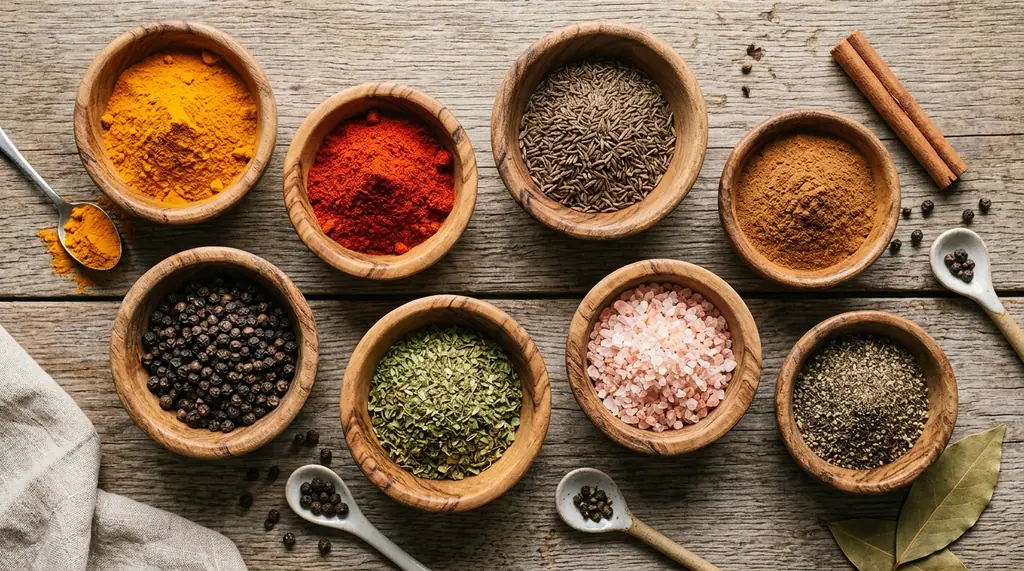
Black pepper is the most universally used spice on the planet. It adds heat, depth, and brightness in a way that’s distinct from chili heat — peppery rather than burning. Buy whole peppercorns and grind fresh whenever possible; pre-ground pepper loses most of its volatile compounds within weeks. Black pepper works in virtually everything savory, and a small amount added to sweet dishes (like chocolate desserts) adds complexity most people can’t identify.
Cumin
Cumin has an earthy, slightly smoky flavor that forms the backbone of Mexican, Indian, and Middle Eastern cooking. It works equally well whole (toasted briefly in oil to bloom the flavor) or ground. Ground cumin goes into spice rubs, curries, chili, and roasted vegetables. It pairs naturally with coriander and paprika, and this combination covers a huge range of global recipes.
Paprika
Paprika ranges from mild and sweet to hot and smoked, depending on the variety. Sweet paprika adds color and a gentle pepper flavor. Smoked paprika adds depth that tastes almost like low-and-slow cooking even in quick dishes. Spanish smoked paprika (pimentón) in particular elevates roasted potatoes, eggs, pasta, and rice dishes in ways that are hard to replicate with other spices.
Cinnamon
Cinnamon has dual citizenship in sweet and savory cooking. In Western kitchens, it’s primarily a dessert spice — pies, cakes, oatmeal. In Middle Eastern and South Asian cooking, it goes into meat dishes, rice, and stews where it adds warmth without sweetness. There are two main varieties: Ceylon (true cinnamon, milder and more delicate) and cassia (the sharper, more pungent type sold in most Western supermarkets). Either works for everyday cooking.
Turmeric
Turmeric’s golden color is unmistakable, and its earthy, mildly bitter flavor is the defining note of most curries. It’s also one of the most researched spices for health — curcumin, the active compound, has been studied extensively for anti-inflammatory effects, as noted by Healthline’s nutrition research. Use it in curries, rice, soups, and golden milk. A small amount goes a long way — too much turns food bitter.
Garlic Powder
Fresh garlic is better in most applications, but garlic powder has legitimate uses. It distributes evenly in dry rubs and spice blends, it doesn’t burn the way fresh garlic can at high heat, and it’s faster when you need garlic flavor without the prep. Keep both on hand. Garlic powder works particularly well in popcorn seasoning, spice blends, and any application where moisture is low.
Chili Flakes (Red Pepper Flakes)
Dried red chili flakes are the easiest way to add heat and complexity to a dish. A pinch bloomed in hot oil before adding other ingredients releases flavor in a way that adding flakes at the end doesn’t replicate. Italians use them in pasta sauce and pizza. Korean and Chinese cooking rely on coarser gochugaru and doubanjiang varieties, but standard red pepper flakes are a versatile starting point for any pantry.
Coriander
Ground coriander has a citrusy, floral warmth that’s milder than cumin but pairs naturally with it. It’s used throughout South Asian and Middle Eastern cooking, and works well in spice rubs for chicken and lamb. Whole coriander seeds toasted and ground fresh have a noticeably better flavor than pre-ground — one of the bigger bang-for-buck spice upgrades you can make.
Oregano
Dried oregano is one of the few cases where dried can outperform fresh, because drying concentrates the essential oils. It’s the defining herb in Italian and Greek cooking — pizza sauce, pasta, grilled meats, Greek salad. Mexican oregano is slightly different from Mediterranean oregano, with a more citrusy, earthy profile that works better in chili and pozole.
Mustard Seeds
Mustard seeds behave differently depending on how you use them. Whole seeds tempered in hot oil pop and develop a nutty flavor entirely unlike the sharp heat of raw mustard. Ground mustard powder adds heat and acts as an emulsifier in sauces and dressings. Black and brown mustard seeds are more pungent than yellow; South Asian cooking relies on black mustard seeds tempered in oil as a base for countless dishes.
How to Store Spices Properly
Most people store spices wrong. The common mistakes: next to the stove (heat degrades them), in clear jars near windows (light degrades them), and in the freezer (condensation degrades them). The right approach is a cool, dark cabinet away from heat sources. Whole spices last 3–5 years stored correctly; ground spices last 1–3 years. The practical test: if a spice smells like nothing when you open the jar, it has no flavor left to give.
Buying whole spices and grinding as needed is the biggest single upgrade available to home cooks. A $20 blade grinder dedicated to spices makes a noticeable difference in flavor intensity. For more on building a kitchen that supports better cooking, practical food and drink choices covers how stocking the right ingredients shapes daily eating habits.
Spice Blends Worth Making at Home
Pre-made spice blends are convenient, but they often include salt, sugar, or anti-caking agents that limit how you can use them. Making your own takes five minutes and produces better results. Three blends worth knowing:
- All-purpose dry rub: 2 parts paprika, 1 part cumin, 1 part garlic powder, 1 part black pepper, ½ part cayenne. Works on chicken, pork, beef, and roasted vegetables.
- Simple curry powder: 2 parts cumin, 2 parts coriander, 1 part turmeric, ½ part chili flakes, ½ part cinnamon. Add to oil before other ingredients.
- Za’atar base: 2 parts dried oregano or thyme, 1 part sumac, 1 part sesame seeds. Mix with olive oil and spread on bread or use as a finishing spice for roasted foods.
India’s spice history runs deep — the port city of Kochi was one of the world’s first major spice trading hubs, and much of what we consider essential kitchen spices today traces back to that trade network. Kochi’s role as the Indian spice trade’s queen city gives useful context on where these ingredients came from and why they spread globally.
Frequently Asked Questions About Essential Kitchen Spices
What spices should every kitchen have?
The core ten are: black pepper, cumin, paprika, cinnamon, turmeric, garlic powder, chili flakes, coriander, oregano, and mustard. These cover the widest range of global cuisines and provide a foundation for nearly any recipe. From there, you can add more specialized spices based on what you cook most often.
What is the king of all spices?
Black pepper is widely called the king of spices — historically and culinarily. It originated in Kerala, South India, and was so valuable in ancient and medieval trade that it was sometimes used as currency. Today it’s the most widely used spice globally, present in virtually every cuisine in the world.
Do spices expire?
Spices don’t go bad in the way that fresh food does — they won’t make you sick when old. But they do lose potency. Ground spices lose most of their flavor within 1–3 years; whole spices last 3–5 years. The simple test: open the jar and smell it. If there’s no aroma, there’s no flavor worth cooking with. Replace it.
What spice has the most health benefits?
Turmeric has the most research behind it, primarily because of curcumin, its active compound. Studies have examined its anti-inflammatory and antioxidant properties. Cinnamon has also been studied for effects on blood sugar regulation. Black pepper contains piperine, which increases the absorption of other nutrients. No single spice is a cure-all, but most culinary spices have documented bioactive compounds beyond their flavor contribution.