Ronnie Coleman’s Workout Routine and Diet Plan: Training Like the King
Ronnie Coleman won the Mr. Olympia title eight consecutive times between 1998 and 2005 — a record he shares with Lee Haney. He didn’t do it by training smart. He did it by training harder than anyone else thought was physically possible. Coleman is on record squatting 800 pounds, deadlifting 800 pounds, and pressing 200-pound dumbbells for reps, all while maintaining a physique that redefined what a human body could look like.
What makes his story stranger is that he was a full-time police officer in Arlington, Texas through most of his Olympia run. He trained early in the morning before patrol shifts, ate out of Tupperware containers, and still somehow found time to film the training videos that became bodybuilding legend. If you’re looking to understand his program — what he trained, how he structured his week, and how he ate to sustain that kind of mass — this is the breakdown.
Ronnie Coleman’s Training Philosophy
Coleman trained on a six-day split with one rest day on Sunday. His approach was built around two principles that most modern training advice discourages: extremely heavy weights and high volume in the same session. He didn’t periodize in any modern sense — he went heavy, every session, on compound movements first, then finished with isolation work. His famous catchphrase, “Yeah buddy, lightweight baby!” was delivered while lifting weights most powerlifters would consider a serious working set.
According to the IFBB, Coleman accumulated 26 professional victories over his career — more than any other IFBB Pro in history at the time. His physique at peak condition reportedly reached 297–300 pounds in the off-season, dropping to around 257–265 pounds on competition day. The mass he carried required a training stimulus that most programs don’t come close to replicating.
Ronnie Coleman’s Weekly Workout Schedule
Coleman hit each muscle group twice a week across six days: back, shoulders, and biceps on Monday and Thursday; legs on Tuesday and Friday; chest and triceps on Wednesday and Saturday.
Monday: Back, Shoulders, and Biceps (Session 1)
Coleman opened the week with one of his most demanding sessions. He performed 10–12 exercises with 3–4 sets each, averaging 10–12 reps per set.
- Seated dumbbell press
- Front dumbbell press
- Military press
- Cable curls
- Preacher curls
- Seated alternating dumbbell curls
- Barbell curls
- One-arm dumbbell rows
- T-bar rows
- Barbell rows
- Deadlifts
Tuesday: Legs (Session 1)
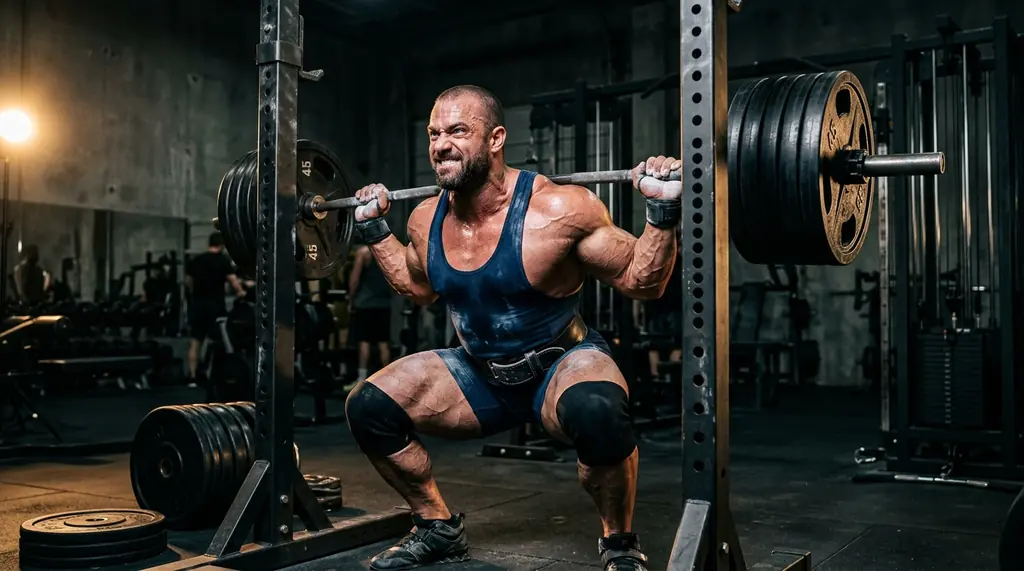
Tuesday focused entirely on legs. Coleman’s squat numbers are what made these sessions notorious — he was doing full depth squats with weights that would be extreme in any powerlifting gym.
- Squats
- Seated leg curls
- Stiff-leg deadlifts
- Parking lot lunges
- Leg press
Wednesday: Chest and Triceps (Session 1)
Seven exercises targeting the chest and triceps, with the same 3–4 sets of 10–12 reps structure.
- Close-grip bench press
- Seated dumbbell extensions
- Seated cambered bar extensions
- Flat bench dumbbell flyes
- Flat bench dumbbell press
- Incline barbell press
- Bench press
Thursday: Back, Shoulders, and Biceps (Session 2)
The second back and arm session used different exercise variations to hit the same muscles from different angles — a technique Coleman relied on to maintain stimulus across the high-frequency split.
- Low pulley rows
- Lat pulldowns
- Front lat pulldowns
- Alternating dumbbell curls
- Machine curls
- Standing cable curls
- Front lateral dumbbell raises
- Machine lateral raises
Friday: Legs (Session 2)
The second leg day used different variations again — front squats and hack squats in place of the back squat and lunge combination from Tuesday.
- Leg extensions
- Front squats
- Hack squats
- Standing leg curls
- Lying leg curls
Saturday: Chest, Triceps, and Calves
Saturday rounded out the week with a second chest and triceps session plus calf work. This was one of his longer sessions in terms of exercise variety.
- Incline dumbbell press
- Incline dumbbell flyes
- Barbell decline press
- Decline dumbbell press
- Skull crushers
- Machine dips
- Seated tricep extensions
- Crunches
- Seated calf raises
- Donkey calf raises
Sunday: Rest. Full recovery day — the only one of the week.
Ronnie Coleman’s Diet Plan
Coleman’s diet was high in protein and built around whole foods rather than meal replacement products. He ate large amounts of rice, beans, chicken, beef, eggs, and vegetables — foods that sustained his training volume without relying heavily on supplements. His caloric intake in the off-season was substantial enough to maintain 300 pounds of muscle mass on a 5’11” frame.
A typical day of eating during his competitive years included multiple meals spread across the day, each centered on a lean protein source paired with a complex carbohydrate. He prioritized whole food protein over shakes and kept his fat sources primarily from eggs and red meat rather than added oils. If you’re trying to build a similar nutritional foundation, eating for fitness goals requires a clear strategy around protein timing and caloric surplus.
According to BarBend’s profile on Coleman, he consumed around 5,000–6,000 calories per day in his off-season peak, with protein intake hovering around 400–500 grams daily across 6–8 meals.
Ronnie Coleman’s Body Stats
- Height: 5’11” (180 cm)
- Off-season weight: approximately 300 lbs (136 kg)
- Competition weight: approximately 257–265 lbs (116–120 kg)
- Date of birth: May 13, 1964
- IFBB titles: 26 professional victories, 8x Mr. Olympia (1998–2005)
Can You Train Like Ronnie Coleman?
The honest answer is no — not at the same loads, and not with the same recovery capacity. Coleman trained at an elite level with advantages in genetics, pharmaceutical support standard at the professional level of the era, and decades of progressive overload. His program is also responsible for multiple serious surgeries he has needed since retiring, including bilateral hip replacements.
That said, the structural principles translate. Compound movements first, hit each muscle twice a week, push progressive overload on multi-joint lifts, and eat enough protein from real food. The volume and weights would need to be scaled dramatically for natural, recreational lifters — a six-day split with heavy compound work is hard even at moderate loads. And once you’re training more than four days a week, recovery stops being optional. For a broader breakdown of how nutrition supports this kind of training load, practical food and drink choices for active people offers a useful starting framework.
Frequently Asked Questions About Ronnie Coleman’s Workout
How many days a week did Ronnie Coleman train?
Coleman trained six days a week with Sunday as his only rest day. He followed a split that hit each major muscle group twice per week, pairing back and shoulders with biceps on Mondays and Thursdays, legs on Tuesdays and Fridays, and chest with triceps on Wednesdays and Saturdays.
What was Ronnie Coleman’s heaviest lift?
Coleman is documented performing an 800-pound barbell squat and an 800-pound deadlift, both captured on training footage. He also regularly pressed 200-pound dumbbells on incline bench and performed barbell rows with well over 400 pounds. These lifts were performed in addition to full bodybuilding volume work, not instead of it.
What did Ronnie Coleman eat to get so big?
His diet was built around whole foods: chicken, beef, rice, eggs, vegetables, and beans. He ate 6–8 meals daily and consumed an estimated 5,000–6,000 calories in the off-season. His protein intake was approximately 400–500 grams per day, primarily from whole food sources rather than protein shakes.
Did Ronnie Coleman have a day job while competing?
Yes. Coleman worked as a police officer with the Arlington, Texas Police Department through most of his Mr. Olympia run. He trained in the early morning before his shifts and competed professionally at the same time, a combination that made his achievements more unusual even by the standards of elite bodybuilding.