Home Renovation Ideas That Actually Add Value (And Look Amazing)
Most home renovation advice is the same recycled list: update the kitchen, redo the bathroom, add curb appeal. That’s not wrong — those projects do deliver the best returns. But the gap between a renovation that pays off and one that eats your budget comes down to how you approach it, not just what you choose to do. The right upgrades, sequenced correctly and priced against your local market, can return more than they cost. The wrong ones — even expensive, well-executed ones — can actually hurt your resale value.
The National Association of Realtors Remodeling Impact Report tracks exactly which renovations buyers care about most. Kitchen upgrades and bathroom remodels top that list consistently — not because they’re trendy, but because buyers discount homes with dated kitchens and bathrooms faster than almost anything else. Even modest updates in these rooms move the needle.
This guide covers the best home renovation ideas by category, budget, and goal — from full gut renovations to sub-$500 weekend projects.
Best Home Renovation Ideas to Boost Home Value
Before starting any project, it’s worth understanding which renovations buyers and appraisers actually reward. Not everything adds value proportionate to its cost. Here are the categories that consistently perform best.
Kitchen Renovations: The Highest-ROI Upgrade
Kitchens drive buying decisions more than any other room, and the data backs this up. A full kitchen renovation can recover 60–80% of its cost at resale. You don’t need to replace everything, though. Refinishing cabinet fronts, swapping hardware, installing a new backsplash, and upgrading to energy-efficient appliances can modernize a kitchen for a fraction of full-remodel cost — and buyers often can’t tell the difference at first glance.
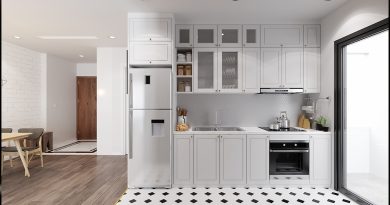
Small kitchens need a different approach. Focus on vertical storage with floor-to-ceiling cabinetry, light colors to visually open the space, and replacing a bulky island with a pull-out counter extension. Under-cabinet lighting is one of those small additions that makes a kitchen feel finished rather than builder-grade.
For a full renovation, quartz countertops, soft-close drawers, and a farmhouse-style sink are consistently among the top features buyers search for in 2026.
Bathroom Remodel: Small Space, Big Impact
Bathrooms punch above their weight on ROI. A mid-range remodel recoups around 70% of its cost, and even small updates make a real difference. Replacing a vanity, installing a rainfall showerhead, re-caulking the tub, and re-grouting tile floors can transform a dated bathroom in a weekend for a few hundred dollars.
For a larger renovation, consider converting a tub-shower combo into a walk-in shower with frameless glass — this is particularly attractive to buyers over 50 who prioritize accessibility. Heated floors, once a luxury-only feature, are now available as affordable DIY tile mat kits that most homeowners can install themselves.
Open Floor Plan Renovations: Creating Space and Flow
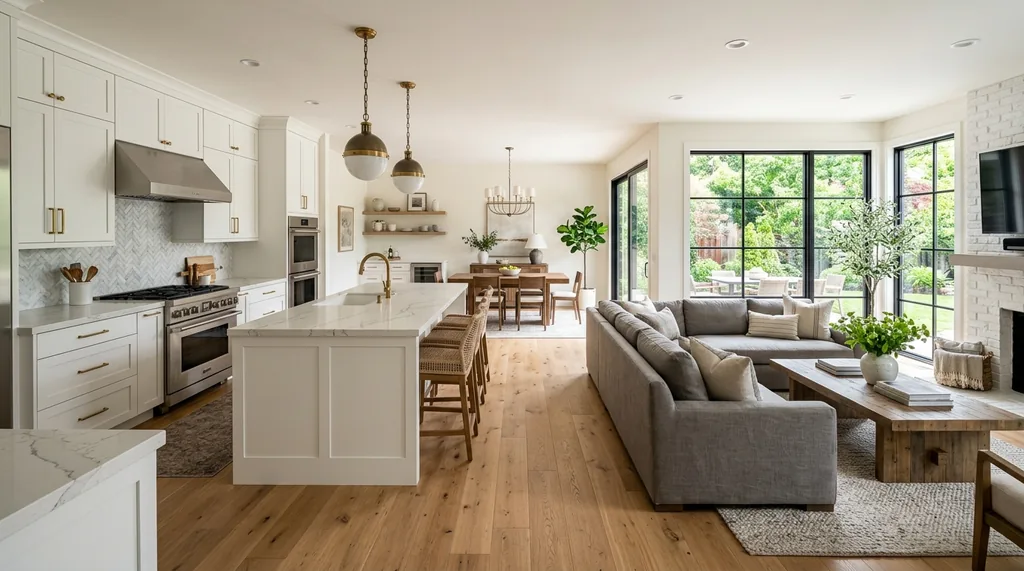
Removing a non-load-bearing wall to open up a floor plan is one of the most dramatic renovations you can do relative to its cost. Open layouts improve natural light, make smaller homes feel bigger, and create better flow between kitchen, dining, and living spaces — which buyers strongly prefer.
The critical first step: confirm the wall isn’t load-bearing before touching it. A structural engineer will assess this for a few hundred dollars. If it is load-bearing, a steel beam or LVL lumber can replace it, though that adds cost. Most open-plan conversions run $3,000–$15,000 depending on wall type, size, and whether electrical or plumbing needs rerouting.
Home Renovation Ideas on a Budget
You don’t need a massive budget to make a visible impact. Some of the most effective home renovation ideas cost under $500 and take a weekend.
- Fresh paint — A gallon of quality interior paint runs $30–$60 and covers about 400 square feet. Warm neutrals like greige or soft white make rooms feel larger and photograph well for listings.
- New light fixtures — Swapping outdated brass fixtures for brushed nickel or matte black updates a room instantly. Most swaps take under an hour and don’t require an electrician.
- Cabinet hardware — New drawer pulls and door handles can transform a kitchen or bathroom for under $100. A screwdriver is all you need.
- Landscaping — Mulching beds, trimming overgrown shrubs, and adding seasonal plants costs very little but makes a strong first impression. Curb appeal affects buyer perception before they even step inside.
- Grout and caulk refresh — Discolored grout makes a bathroom look far older than it is. Re-grouting and re-caulking costs under $50 in materials and is a genuine DIY job.
For more room-by-room ideas you can tackle yourself, these DIY home decor ideas for beginners cover specific projects with real cost estimates.
Eco-Friendly Home Renovation Tips
Green renovations used to be a niche interest. Now they’re a practical financial decision — utility costs have risen enough that energy-efficient upgrades often pay for themselves, and buyers increasingly factor them into offers.
The highest-impact eco-friendly upgrades:
- Insulation — Attic, wall, and basement insulation is among the most cost-effective energy upgrades available. The EPA estimates proper insulation cuts heating and cooling costs by up to 15%.
- Energy-efficient windows — Double or triple-pane windows with low-E coatings reduce heat transfer substantially. In cold climates, they typically pay for themselves within 5–10 years through lower heating bills.
- Solar panels — The average U.S. homeowner who installs solar saves about $1,500 per year on electricity, per the U.S. Department of Energy. Federal tax credits cover 30% of installation costs through 2032.
- Low-flow plumbing — WaterSense-certified faucets and showerheads use at least 20% less water than standard models with no noticeable performance difference.
- Reclaimed materials — Reclaimed wood flooring and recycled glass countertops add character that new materials can’t replicate, while cutting the renovation’s environmental footprint.
Stack several of these and you’ll likely qualify for state-level rebates on top of federal credits, which can offset a significant chunk of the total cost.
Ideas for Renovating an Old House
Old houses are rewarding to renovate — original hardwood floors, solid wood trim, and period architectural details add value that new construction simply doesn’t have. But pre-1980s homes come with specific risks that need addressing before any cosmetic work begins.
Tackle these in order before anything else:
- Electrical — Homes built before 1980 may have aluminum wiring or knob-and-tube systems that pose real fire risks. Get a licensed electrician to assess the panel and wiring first.
- Plumbing — Galvanized steel pipes corrode over time and reduce water pressure. Replacing them with copper or PEX is expensive but not optional in homes with original plumbing.
- Foundation and structure — Wall cracks and uneven floors can signal foundation movement. Catching this early is vastly cheaper than addressing it after cosmetic work is complete.
- Lead and asbestos — Homes pre-1978 may have lead paint. Pre-1980 homes may have asbestos in floor tiles, insulation, or popcorn ceilings. Professional abatement is required before renovation proceeds.
Once the systems are sound, the character elements are worth preserving. Renovation experts at This Old House consistently recommend restoring original millwork and architectural details rather than replacing them — they’re the reason buyers pay a premium for older homes in the first place.
If you’re also thinking about whether your furniture still fits the updated space, knowing when to replace versus refinish your home furniture can save you from an unnecessary additional cost.
Modern Home Renovation Trends for 2026
Design cycles move fast. Here’s what’s actually gaining traction in 2026, based on what buyers are responding to and what’s showing up in new builds.
- Warm neutrals — Cool gray has had a long run. Terracotta, sage green, and creamy white are replacing it across styles from minimal to maximalist. These tones photograph warmer and feel less clinical.
- Mixed metals — The one-metal rule is dead. Brushed gold with matte black, chrome with unlacquered brass — intentional mixing reads as considered design rather than mismatched.
- Biophilic elements — Living walls, natural stone, large windows, and plants reduce stress and improve air quality. They also photograph extremely well, which matters for listings.
- Smart home tech — Smart thermostats and app-controlled lighting are now expected rather than impressive. Choose systems with strong long-term support — the graveyard of discontinued smart home platforms is long.
- Home offices — Hybrid work isn’t going anywhere. Converting a spare bedroom, basement corner, or loft into a dedicated office adds genuine daily utility and appeals to a large buyer segment.
Planning Your Renovation: Order, Budget, and Timeline
The sequence matters. Start in the wrong order and you’ll redo work, blow the budget, or create problems that are expensive to fix. Here’s how to approach it correctly.
What Is the Correct Order to Renovate a House?
Work structural-to-cosmetic, outside-to-inside, top-to-bottom. In practice: structural repairs first, then mechanical systems (HVAC, plumbing, electrical), then insulation and drywall, then flooring, then painting, then cabinetry and fixtures, and finally trim and finishing details. Paint before the plumber is done and you’re repainting. Floor before drywall is hung and you’re replacing scratched planks. The sequence isn’t arbitrary.
The 30% Rule in Remodeling
The 30% rule says don’t spend more than 30% of your home’s current market value on a single renovation. On a $400,000 home, that’s a $120,000 cap. The logic is simple: you can’t price above the neighborhood ceiling. Buyers won’t pay $700,000 for a house on a street where homes sell for $450,000, regardless of how premium the finishes are. Over-improving relative to your neighborhood is one of the most common and most expensive renovation mistakes homeowners make.
Is $100,000 Enough to Renovate a House?
In most U.S. markets, yes. A $100,000 budget can cover a full kitchen remodel ($25,000–$50,000), a primary bathroom renovation ($15,000–$25,000), new flooring throughout ($10,000–$20,000), and cosmetic updates elsewhere. The caveat: if the home needs structural work, HVAC replacement, or electrical upgrades, those costs hit first and can consume a large share of the budget before any visible improvement. A pre-renovation inspection is worth every dollar. Bob Vila’s cost guides offer detailed project breakdowns by region if you want to reality-check your estimates.
Frequently Asked Questions About Home Renovation Ideas
What is the 30% rule in remodeling?
The 30% rule advises homeowners not to spend more than 30% of their home’s current market value on a renovation. The purpose is to avoid over-improving relative to the neighborhood ceiling — spending $150,000 on a home worth $300,000 in a $350,000 neighborhood means you’re unlikely to recover that investment at resale.
What is the correct order to renovate a house?
The correct sequence is: structural repairs first, then mechanical systems (HVAC, plumbing, electrical), then insulation and drywall, then flooring, then painting, then cabinetry and fixtures, and finally trim and finishes. This order prevents earlier work from being damaged by later trades.
Is $100,000 enough to renovate a house?
In most markets, $100,000 funds a full kitchen remodel, a bathroom update, and new flooring throughout. The scope depends on your home’s size and whether structural or mechanical systems need work. In high-labor-cost cities, the same budget covers less, so detailed contractor quotes before committing to a budget are essential.
What renovation adds the most value to a home?
Kitchen renovations and bathroom remodels add the most value, per the National Association of Realtors. A mid-range kitchen remodel recovers 60–80% of its cost at resale; bathroom remodels recover around 70%. New garage doors and exterior paint deliver strong returns at relatively low cost — making curb appeal upgrades some of the best value in residential renovation.