
Transform Your Space: DIY Home Decor Ideas for Every Room and Budget
DIY home decor is the practice of creating, customizing, or repurposing items to beautify your living space without relying on expensive store-bought pieces. Whether you’re working with a tight budget or simply want a home that feels uniquely yours, DIY home decor projects give you complete creative control over every corner of your space. In 2026, the trend continues to grow as more homeowners discover that a few tools, some creativity, and affordable materials can produce results that rival professional interior design.
Getting Started with DIY Home Decor
Before diving into your first project, it helps to gather the right tools and set realistic expectations. Fortunately, most beginner DIY home decor projects require only basic supplies that you likely already own.
Essential Tools for Beginners
To get started with DIY home decor, you need a small core set of tools: a hot glue gun, measuring tape, scissors, a hammer and nails, sandpaper, and a basic set of paint brushes. In addition, a craft knife and a level will quickly become your best friends as you tackle wall art and shelf projects. These tools cover the vast majority of beginner to intermediate DIY home decor projects and cost less than $50 in total.
Choosing Your First Project
Starting simple builds confidence. For example, painting an old picture frame, creating a woven wall hanging, or making custom throw pillow covers are all excellent first projects for beginners. As a result, you gain practical skills while producing something you can immediately display. Once you complete a few small wins, more ambitious projects — like building a floating shelf or repainting furniture — feel far less intimidating.
DIY Home Decor Ideas for Your Living Room
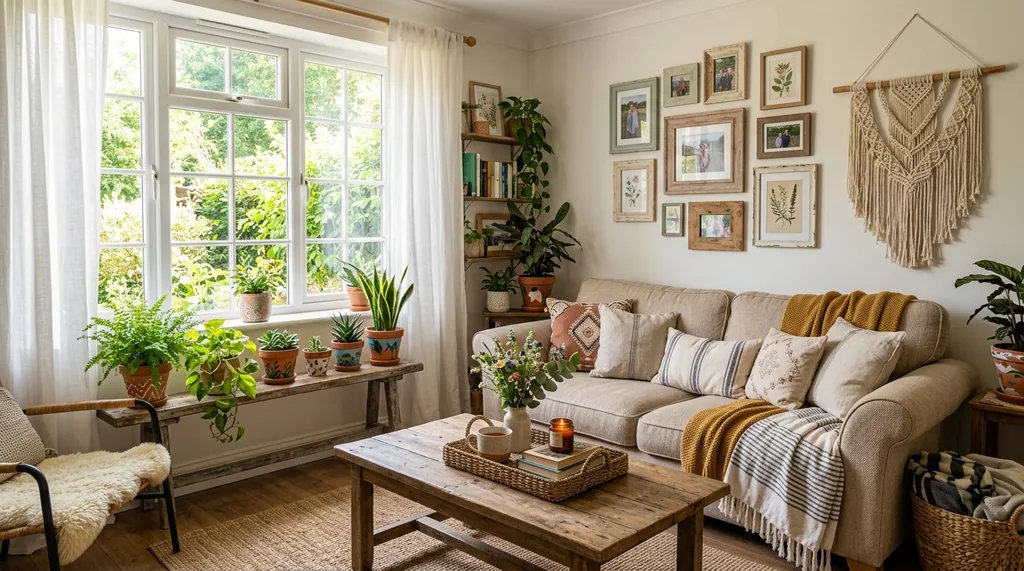
The living room is the most visible space in your home, which makes it the best place to start with DIY home decor ideas for living rooms. Fortunately, even small changes create a significant visual impact.
- Gallery wall: Collect a mix of frames in complementary sizes, print free artwork or personal photos, and arrange them in a grid or salon-style layout. A gallery wall transforms a blank surface into a focal point and costs under $30 when you use existing frames.
- Painted furniture: Instead of replacing a tired coffee table or bookcase, sand it lightly and apply a fresh coat of chalk paint. Chalk paint adheres to most surfaces without priming, so consequently the process takes a single afternoon.
- Macramé wall hanging: Macramé remains one of the most popular DIY home decor trends in 2026. With a wooden dowel and a ball of cotton rope, you can create a textured wall piece for under $15. Moreover, dozens of free tutorials on Apartment Therapy walk you through every knot pattern.
- DIY throw pillow covers: Sewing or no-sew envelope-style pillow covers let you change your color palette with the seasons without buying new pillows. As a bonus, fabric remnants from craft stores are often available for under $5 per yard.
Budget-Friendly DIY Home Decor Projects
One of the biggest benefits of DIY home decor is cost savings. According to interior design research, professional decorating services typically cost between $50 and $200 per hour, while most DIY alternatives achieve similar results for a fraction of that. However, budget-friendly DIY home decor does not mean cutting corners — it means being strategic with your materials.
Thrift stores and estate sales are excellent sources for unique pieces at low prices. For instance, an old wooden ladder from a thrift store becomes a stylish blanket rack with a coat of paint and minimal effort. Similarly, mason jars make versatile vases, candle holders, and storage containers when grouped on a tray. In contrast, buying these items new at a home goods store would cost three to five times as much.
Here are five DIY home decor projects you can complete for under $20 each:
- Painted terracotta pots styled as a tabletop plant cluster
- Washi tape geometric wall art in a hallway or bedroom
- Rope-wrapped vases using dollar-store glass bottles
- DIY floating bookshelves using invisible shelf hardware
- Stenciled accent wall using a reusable craft stencil
Eco-Friendly DIY Home Decor Ideas
Eco-friendly DIY home decor uses upcycled, natural, or sustainably sourced materials to reduce waste while creating beautiful spaces. In fact, upcycling — transforming discarded items into something functional or decorative — is one of the most rewarding approaches in the DIY home decor space. Old wine crates become wall shelves, worn denim jeans transform into woven baskets, and wooden pallets evolve into outdoor furniture.
When choosing materials, prioritize water-based paints, natural fiber textiles (cotton, jute, linen), and reclaimed wood over synthetic alternatives. Furthermore, the U.S. Environmental Protection Agency’s recycling guidelines offer practical advice on responsibly sourcing and disposing of craft materials. As a result, your DIY home decor projects contribute to sustainability goals rather than adding to landfill waste.
DIY Home Decor for Small Spaces
Small spaces benefit most from thoughtful DIY home decor because every design choice matters. The key principle is to use vertical space aggressively. Therefore, wall-mounted shelves, pegboards, and hanging planters are far more effective in small rooms than floor-standing pieces that consume limited square footage.
Mirrors are another powerful tool for small-space DIY home decor. A large mirror framed with reclaimed wood or wrapped in rope visually doubles the perceived size of a room. Additionally, choosing a consistent color palette — ideally light neutrals with one or two accent colors — creates a cohesive look that makes compact spaces feel intentionally designed rather than crowded.
Multi-functional DIY pieces are especially valuable in small homes. For example, a storage ottoman built from a wooden crate serves as a coffee table, extra seating, and hidden storage all at once. Similarly, a pegboard mounted near the entryway handles coats, bags, and keys without claiming floor space.
How to Make Your DIY Home Decor Look Expensive
The difference between DIY home decor that looks polished and DIY that looks crafty usually comes down to three factors: material quality, consistency, and finishing.
First, invest in quality where it counts. Hardware — hinges, knobs, drawer pulls — is inexpensive but creates a dramatically upgraded look when swapped out for brushed brass or matte black options. Second, maintain a consistent color palette across your DIY projects so that each piece feels like part of a curated collection rather than a random assortment. Third, finishing matters enormously: sand wood smooth before painting, apply two thin coats instead of one thick coat, and use a top coat or sealant to protect your work.
It is also worth knowing when to replace rather than refresh. If a furniture piece has structural damage or a finish that will not hold paint well, upgrading it entirely may save time. For guidance on timing those decisions, see our guide on when to replace your home furniture — knowing when to let go is just as important as knowing how to refresh.
Frequently Asked Questions About DIY Home Decor
How do I make DIY home decor on a budget?
Start by shopping thrift stores, dollar stores, and craft store sale bins for materials. Focus on projects that repurpose items you already own — old frames, glass jars, wooden crates, and fabric scraps are all versatile starting points. In addition, free printables for wall art and discount fabric remnants keep costs under $10 per project for most beginner projects.
What is the best way to start DIY home decor?
Begin with one room and one small project, such as creating a gallery wall or making a throw pillow cover. This approach lets you build skills and confidence before committing to larger, more material-intensive projects. Moreover, completing a visible project quickly gives you immediate motivation to continue.
How do I choose materials for DIY home decor?
Match materials to the function and location of the piece. For wall decor, lightweight materials like canvas, paper, and fabric work well. For furniture projects, choose wood, plywood, or MDF based on the weight the piece needs to support. Furthermore, water-based paints and finishes are easier to work with, dry faster, and clean up without harsh chemicals.
What are the latest DIY home decor trends in 2026?
In 2026, the top DIY home decor trends include earthy natural textures (jute, rattan, raw linen), maximalist gallery walls, hand-painted furniture with bold geometric patterns, and indoor plant displays built from repurposed wood and metal. Consequently, DIY home decor projects that incorporate natural materials and handmade imperfection are especially popular because they contrast with the overly polished look of mass-produced home goods.
How do I personalize DIY home decor projects?
Personalization comes from incorporating meaningful elements: family photos, a color palette that reflects your personality, or materials that have sentimental value. For example, using fabric from a favorite old shirt in a patchwork throw pillow or incorporating driftwood collected on a family trip adds meaning that no store-bought piece can replicate. As a result, your home tells your story rather than a brand’s story.
How do I organize my DIY home decor supplies?
Store supplies by project type — painting, sewing, crafting — in labeled bins or stackable clear containers. A pegboard mounted in a closet or dedicated craft space keeps tools visible and accessible. In addition, keeping an inventory list of current materials helps you avoid duplicate purchases and plan future projects more efficiently.

Pingback: Home Renovation Ideas: Top Transformations for Every Budget