5 Benefits of Ketamine Infusion Therapy for Depression
What is ketamine infusion therapy?
Ketamine has been used as a surgical anesthetic for decades. When doctors began using it off-label for depression, the results were surprising. Not just because it worked, but because it worked fast. For people who have not responded to standard antidepressants, ketamine infusion therapy for depression has become one of the most promising options in psychiatry.
Here are five reasons it is gaining serious clinical attention and why it may be worth discussing with a psychiatrist if you are managing treatment-resistant depression.
1. It addresses more than just depression
Ketamine reaches beyond depression. Doctors also use it for PTSD, generalized anxiety disorder, bipolar disorder, panic attacks, and certain phobias. The same mechanism that interrupts depressive episodes blocks NMDA receptors and rapidly increases glutamate activity, which also quiets overactive thought patterns behind many anxiety disorders.
If you are managing more than one of these conditions, a single induction course may address several at once. SSRIs typically cannot offer that.
2. The success rates are unusually high
More than 80% of patients report meaningful improvement from ketamine infusion therapy. Standard antidepressants have a response rate closer to 50-60%. For people with treatment-resistant depression, meaning those who have not responded to two or more medications, that number drops further. Ketamine fills a real clinical gap there.
A typical induction series involves six infusions over two to three weeks: three in the first week, two in the second, one in the third. Some patients then move to monthly maintenance sessions. According to the National Institute of Mental Health, treatment-resistant depression affects a significant portion of people with major depressive disorder, and ketamine is one of the few treatments that consistently delivers results for that group.
3. It works in hours, not weeks
This is what surprises people most. Standard antidepressants like SSRIs take four to six weeks to produce noticeable effects. Ketamine infusion therapy for depression can bring relief within one to twenty-four hours of the first session.
For people experiencing suicidal ideation, that speed is clinically significant. Research has documented cases where suicidal thoughts diminished within hours, a level of responsiveness no standard antidepressant can match.
The mechanism differs from SSRIs. Rather than slowly adjusting serotonin or dopamine levels, ketamine blocks NMDA receptors and triggers rapid glutamate release, promoting new synaptic connections through a process called synaptogenesis. If you are exploring ongoing support options, online therapy platforms can complement clinical treatment once stabilization is underway.
4. Every session is medically supervised
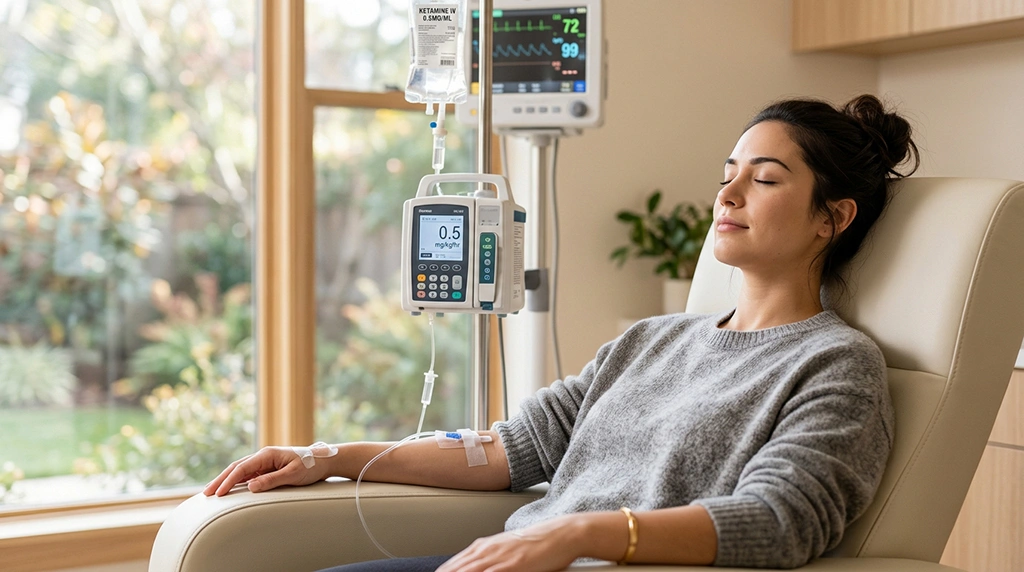
Ketamine infusions are administered in licensed medical facilities, not at home. Each session lasts about 45 minutes, and trained staff monitor you throughout. The dissociative effects, that floaty dream-like sensation some patients describe, are expected and managed clinically. They typically resolve within 30 to 60 minutes of finishing the infusion.
This is a supervised medical procedure. The clinical oversight is what makes it safe, and it is a meaningful distinction from unregulated alternatives.
5. Side effects are short-lived
Ketamine side effects are real but temporary. Most patients experience some combination of dissociation, dizziness, mild nausea, temporarily elevated blood pressure, and blurred vision during or just after infusion. These resolve before you leave the clinic.
The bigger practical consideration for most patients is cost. IV ketamine is not covered by most insurance plans. Esketamine (Spravato), a nasal spray derived from ketamine, has FDA approval for treatment-resistant depression and acute suicidal ideation, and is sometimes covered by insurance. Worth asking your provider about.
FAQs about ketamine infusion therapy for depression
How is ketamine different from regular antidepressants?
Standard antidepressants target serotonin or dopamine and take four to six weeks to work. Ketamine blocks NMDA receptors and triggers rapid glutamate release, which can produce relief within hours rather than weeks.
How quickly will I feel results from ketamine therapy?
Many patients notice improvement within one to twenty-four hours of their first infusion. For some, suicidal ideation diminishes within hours, a response no standard antidepressant can match.
How long do the effects of ketamine infusion last?
A single infusion typically provides relief for three to seven days. A full six-infusion induction series can extend that to weeks or months. Monthly maintenance infusions help sustain long-term benefits.
Is IV ketamine FDA-approved for depression?
IV ketamine is used off-label for depression. Esketamine (Spravato), a nasal spray form, has FDA approval specifically for treatment-resistant depression and acute suicidal ideation.
What are the side effects of ketamine infusion therapy?
Short-term effects include dissociation, dizziness, nausea, temporarily elevated blood pressure, and blurred vision. These typically resolve within 30 to 60 minutes after the infusion ends.