
The Yoga Mistakes Most Beginners Make — And What to Do Instead
Everyone starts yoga as a beginner. And almost everyone starts yoga making the same handful of mistakes. The good news? They’re all fixable — usually with one small adjustment.
Yoga instructor Jason Freskos has spent years guiding beginners through their first classes, and the patterns he sees are consistent. Not lack of flexibility. Not lack of strength. It’s mindset and mechanics: rushing into poses, forgetting to breathe, ignoring props, and pushing through discomfort instead of working with the body.
Here’s what Freskos recommends — and what to do differently.
Why Getting the Basics Right Matters More Than Getting the Pose Right
Yoga’s appeal is that it meets you where you are. But there’s a catch: most beginners walk in thinking yoga is about achieving the shape of a pose. It’s not. Yoga is about finding the right relationship between breath, body, and movement — and the pose is just the vehicle.
“Yoga is a practice that promotes letting go,” says Freskos. That applies to ego, comparison, and the urge to force your body somewhere it isn’t ready to go. When you approach yoga with that mindset, the technical corrections come naturally. When you don’t, you end up fighting your own body.
The Most Common Yoga Mistakes — Fixed
1. Holding Your Breath
This is the number one mistake Jason Freskos sees, and it’s almost universal among newcomers. The moment a pose gets difficult, people hold their breath. It feels like concentration — like you’re bearing down and getting serious. In reality, it’s your nervous system bracing against stress.
The problem is that held breath does the opposite of what yoga requires. Breathing deeply oxygenates your muscles and keeps them pliable. Holding your breath causes tension to build up, lactic acid accumulates, and your range of motion actually decreases. That stretch you’re trying to deepen? You just made it harder.
“You’re pushing too hard if you’re holding your breath,” Freskos warns. If you notice you’ve stopped breathing, back off. Drop into Child’s Pose or a seated position, reset your breath, and come back to the pose when your breathing is steady.
His rule of thumb: always choose breath over the pose. The pose will be there. The breath is what drives everything.
2. Skipping Modifications and Props
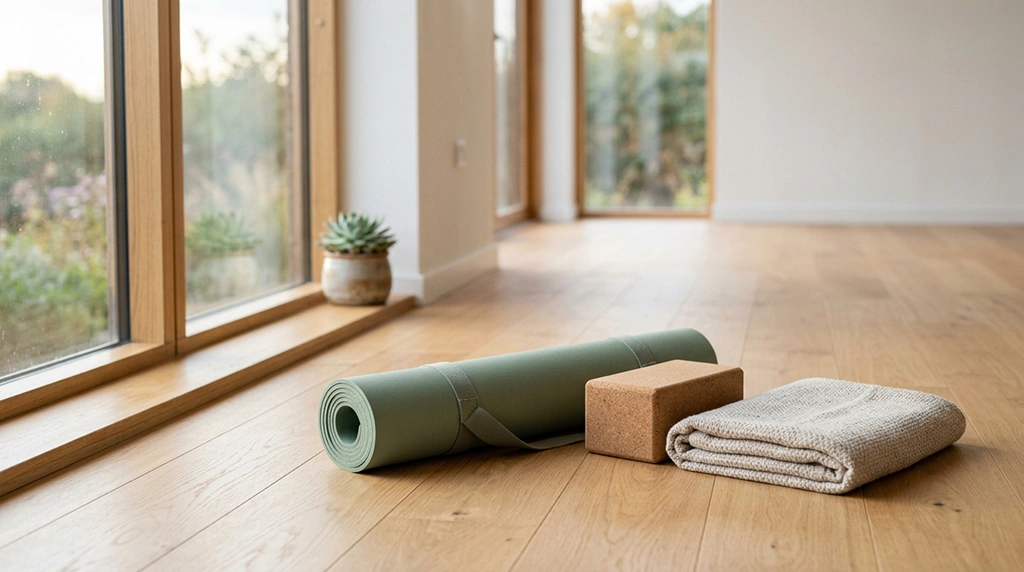
There’s a stigma around using yoga props — blocks, straps, blankets, bolsters — that makes beginners avoid them. It looks like a shortcut. It feels like an admission that you’re not good enough yet.
Freskos pushes back on this completely. Modifications aren’t a compromise. They’re how yoga actually works. “Receiving a stretch in a modified stance is just as beneficial as getting one without,” he says. The body doesn’t know or care whether you used a block. It only cares whether the muscle was engaged correctly.
This matters especially if you’re dealing with previous injuries, arthritis, or limited mobility. Trying to brute-force a full expression of a pose while ignoring pain is how people get hurt. Adjusting the stance until you feel a deep, clean stretch — not a sharp pain — is always the right call.
If your studio offers props, use them. If you’re practicing at home, folded blankets and resistance bands work fine as substitutes.
3. Not Protecting Your Wrists
Yoga places significant load on the wrists — Downward Dog, Plank, Chaturanga, and dozens of other poses require bearing weight through your hands. Most people are not conditioned for this, especially in a world where carpal tunnel syndrome is increasingly common.
“Pay attention to where your hands are placed,” Freskos advises. A few adjustments make a significant difference:
- Spread your fingers wide and press evenly through all four corners of your hand
- Engage your core to take pressure off the wrists by distributing weight more evenly
- Press back into your feet in poses like Downward Dog to shift load from the hands to the legs
- If a pose causes wrist pain, stop immediately and ask your instructor for a modification
Building wrist strength takes time. Don’t rush it. The wrist exercises and modifications your teacher suggests aren’t optional extras — they’re how you build the foundation to do the poses safely over the long term.
4. Pushing Through Pain
There’s a difference between the productive discomfort of a deep stretch and the warning signal of actual pain. New practitioners often can’t tell the difference — and tend to treat all discomfort as something to push through.
Freskos is direct on this: “If yoga hurts, you’re doing it incorrectly.” Sharp pain, joint pain, or pain that sharpens as you hold a pose is a stop sign. Discomfort that eases as you breathe into a stretch is normal.
Learning to read this distinction is one of the most valuable skills you’ll develop as a yoga practitioner. Your body is always communicating — the goal of practice is to get better at listening to it.
5. Comparing Yourself to Others in the Room
This one doesn’t get talked about enough. In a class setting, it’s natural to look around and benchmark yourself against more experienced practitioners. Natural — but counterproductive.
Yoga is not a performance. No one is evaluating your flexibility. The person next to you who can fold flat over their legs has been practicing for years and still has limitations you can’t see. Comparison pulls your focus outward when yoga’s entire point is to turn your attention inward.
Keep your eyes on your own mat. Literally and figuratively.
What Good Beginner Yoga Actually Looks Like
Good beginner yoga looks like consistent, steady breathing — even in the hard poses. It looks like a student reaching for a block without embarrassment. It looks like someone backing out of a pose when something doesn’t feel right, and coming back in when they’re ready.
It doesn’t look like perfect alignment on day one. It doesn’t look like touching your toes. It looks like someone paying attention.
The skills that matter most in yoga — body awareness, breath control, patience — develop slowly and compound over time. The fastest way to build them is to stop trying to skip ahead.
“Just concentrate on the breath,” Freskos says. “The rest will come.”
Frequently Asked Questions About Yoga for Beginners
How often should a beginner practice yoga?
Two to three sessions per week is a solid starting point. This gives your body time to recover while building consistency. Even 20–30 minutes per session is enough to start seeing benefits. Daily practice is fine once your body has adapted, but pushing hard every day early on is a fast track to burnout or injury.
Do I need to be flexible to start yoga?
No — this is one of the most persistent myths about yoga. Flexibility is a result of practice, not a prerequisite. Props and modifications exist precisely so that people of all body types and mobility levels can participate fully from day one. You don’t need to be able to touch your toes to benefit from yoga.
What should a beginner bring to a yoga class?
A water bottle, comfortable clothes you can move in, and an open mind are the essentials. Most studios provide mats, blocks, and straps — but if you’re attending regularly, investing in your own mat is worth it. Avoid heavy meals in the two hours before class.
Is it normal for yoga to feel uncomfortable?
The sensation of a muscle stretching can feel intense, especially if you’re new to it. That productive discomfort is normal. Sharp pain, joint pain, or anything that worsens as you hold a pose is not normal — that’s a signal to stop, back off, and modify. Learning to distinguish between the two is part of developing body awareness through practice.
How long before I start to see results from yoga?
Most people notice improved flexibility and reduced tension within a few weeks of consistent practice. Strength and balance improvements typically come within 4–8 weeks. Mental benefits — reduced stress, better focus, improved sleep — often show up sooner. Consistency matters far more than intensity, especially at the beginning.
Should I tell my yoga teacher about injuries before class?
Always. Even minor or old injuries affect how you should approach certain poses. A good instructor will offer modifications that let you practice safely without aggravating the issue. Staying silent and pushing through is how minor problems become serious ones.